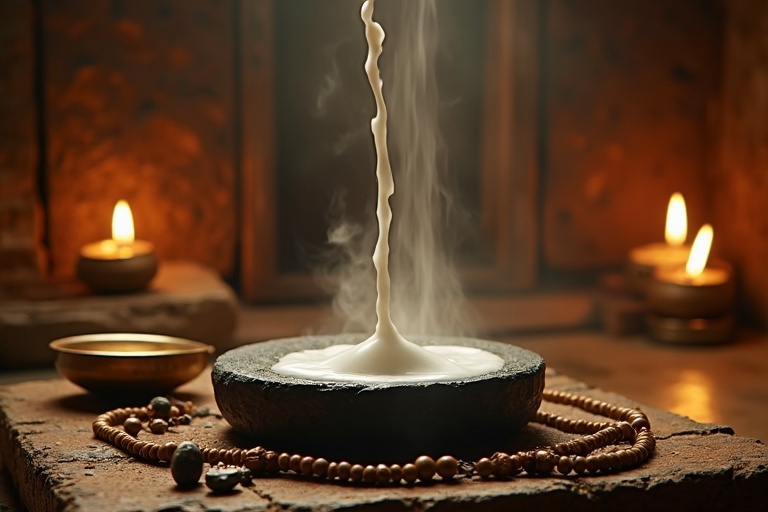
Maha Shivaratri
The great night of Lord Shiva, observed with fasting, night vigil, and worship.
Significance
Commemorates the marriage of Shiva and Parvati, and the night when Shiva performed the Tandava dance.
The Story Behind
Maha Shivaratri, meaning "The Great Night of Shiva," is one of the most significant festivals in Hinduism. According to ancient scriptures, this is the night when Lord Shiva performed the cosmic dance of creation, preservation, and destruction - the Tandava. It is also believed to be the night when Shiva and Parvati were married, symbolizing the union of consciousness and energy. Another legend states that on this night, Shiva saved the world by consuming the poison that emerged from the ocean during Samudra Manthan, turning his throat blue and earning him the name Neelkanth. Devotees observe this sacred night with complete devotion, staying awake and worshipping Shiva to receive his divine blessings and liberation from the cycle of birth and death.
Traditional Rituals & Observances
Fasting (Vrat)
Devotees observe a strict fast throughout the day and night, consuming only fruits, milk, and water. Some observe a complete nirjala fast without even water. The fast is broken only the next morning after the puja.
Abhishekam
The Shiva Lingam is bathed with milk, yogurt, honey, ghee, sugar, and water while chanting mantras. Each substance represents different aspects of purification and devotion. Bilva leaves are offered as they are especially dear to Lord Shiva.
Night Vigil (Jagaran)
Devotees stay awake throughout the night, singing bhajans, chanting mantras, and meditating on Lord Shiva. The night is divided into four quarters, with special pujas performed during each quarter.
Rudra Abhishekam
Special elaborate abhishekam performed with 11 or 21 different sacred items including sandalwood paste, rose water, and sacred ash. This powerful ritual is believed to remove negative karma and bestow divine grace.
Spiritual Benefits
- Liberation from the cycle of birth and death
- Removal of past sins and negative karma
- Attainment of spiritual wisdom and enlightenment
- Fulfillment of desires and wishes
- Protection from negative energies
- Inner peace and mental clarity
- Strengthening of devotion and faith
Puja Items Required
Sacred Mantras
Maha Mrityunjaya Mantra
ॐ त्र्यम्बकं यजामहे सुगन्धिं पुष्टिवर्धनम् उर्वारुकमिव बन्धनान्मृत्योर्मुक्षीय माऽमृतात्
We worship the three-eyed one (Lord Shiva) who is fragrant and nourishes all beings. May he liberate us from death for the sake of immortality, just as the ripe cucumber is severed from its bondage to the vine.
Shiva Panchakshari Mantra
ॐ नमः शिवाय
I bow to Lord Shiva. This five-syllable mantra is the most powerful and sacred mantra dedicated to Lord Shiva, representing the five elements and the divine consciousness.
Share with Family & Friends
Spread the word about this sacred festival
Book This Ritual
Experience authentic Maha Shivaratri puja performed by experienced priests with complete transparency.
Book Now